September 17, 2026
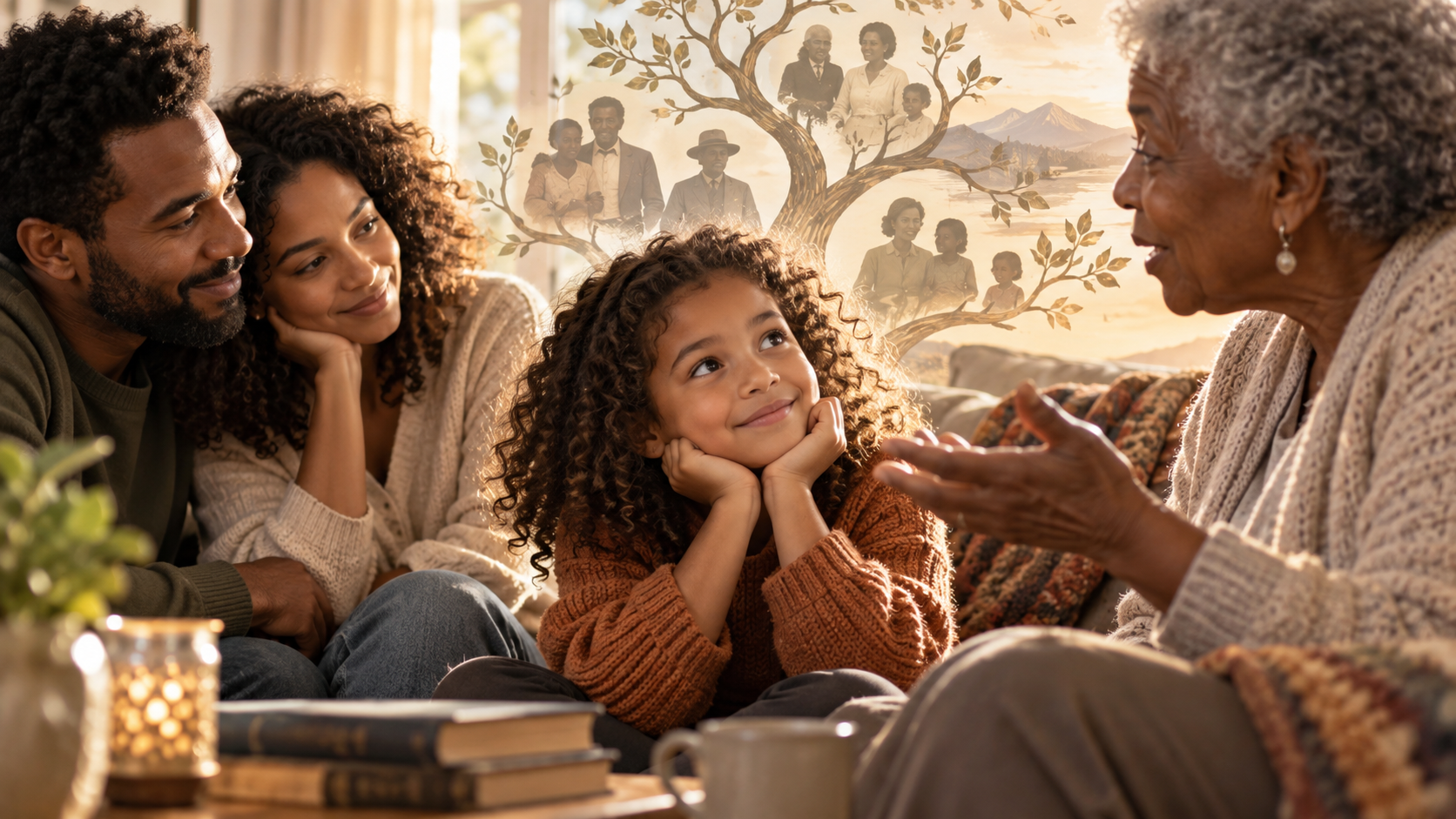
This week I had the privilege of a conversation with Nan-b de Gaspé Beaubien.
If you work in Family Enterprise Canada, you are standing on ground she and her late husband Philippe cleared. When they started, there was not one course, not one practitioner in the field. They built the family business centres across the country, from BC to Dalhousie. I sat on the board of Family Enterprise Canada for two years before I understood how much of it traces back to them.
We were talking about the theme of next year's symposium, 'When Families Talk' 2027, and she said the thing that stopped me: the most important and least understood part of a family business is the family, and the conversations they don't have.
Then she told me about a study. Psychologists had found that the children who knew the most about their grandparents and their family's story were the most resilient. Then 9/11 happened; they went back to the same children, and it held. The kids who knew where they came from came through with fewer problems.
I had never heard of it. I went and found it.
The study is from Emory University in Atlanta. Marshall Duke and Robyn Fivush, mid-1990s. Duke's wife Sara, a psychologist who works with children with learning differences, had noticed that the kids in her practice who could answer a few simple questions about their families, where their parents met, what their grandparents did, seemed to do better across the board.
Duke and Fivush built a twenty-question instrument out of that hunch. They called it the "Do You Know?" scale and gave it to four dozen families with a child between ten and twelve, then ran the children through standard psychological tests.
The children who knew more had higher self-esteem, a stronger sense of control over their own lives, less anxiety, and described their families as working better. The scale also predicted something you could watch: when the researchers recorded these families at dinner, the high-scoring kids came from the families that told more stories.
The data was collected two months before September 11, 2001. Nan-b had it right. Duke and Fivush went back, and the children who knew their family's story coped better over the two years that followed.
Now the part Nan-b understood before I did.
Duke has spent years telling people the questions are not the point. Hand a child the answers like a history quiz and you get nothing. The knowledge is a marker. What it marks is a family that talks, and talks in a particular way. The follow-up work found the children who coped best came from families that spoke about hard family events coherently and with real emotion. Not the families with the most impressive history. The families that could tell the whole story, including the parts that hurt.
Duke describes three shapes a family story can take:
The third one is the one that protects children. It tells them, before they need to know it, that things fall apart and people survive.
Nan-b has been running that experiment for decades. Grandparents' camp, no parents allowed, from the time her six grandchildren were born. When the oldest turned thirteen, she worried he would stop coming, and he was offended she would even ask. Dinner every Tuesday with the grandchildren, still, and when she missed one last week they wanted to know if the meeting had really been that important.
A welcome ceremony for every new spouse. A first daughter-in-law who said the family was all business and no fun, so Nan-b put her in charge of fun. Archives that go back to the early days of Canada, and a table at Christmas covered in photographs the children go back and read like a book.
None of that is genealogy. All of it is the same practice the Emory data points at: the family that keeps talking, in front of the children, about what happened and what they did next.
My son is seven. He is named Oliver for my grandfather and Norm for my wife's, and this summer he went to Ireland to stand in the house his grandfather grew up in. His great-grandmother left Trinidad for England with three children and five pounds, then came back and built a school that still educates girls today.
He knows those stories because we decided he would. We had to make our own rituals. We did not inherit them.
The study is small and correlational, and Duke and Fivush say so. It does not prove that stories cause resilience. What it shows, and what thirty years of Fivush's work keeps showing, is that families who talk this way raise children who carry something the others do not.
So here are the twenty questions. Not to score your children. To find the stories you have never told.
Answer yes or no.
Question 20 is not a mistake. It checks whether your family has its own jokes. The families that do tend to have everything else.
Pick one your child would answer no to. Tell that story at dinner this week. Then tell them the version where it went wrong.
Source: Duke, M.P., Lazarus, A., & Fivush, R. (2008). Knowledge of family history as a clinically useful index of psychological well-being and prognosis: A brief report. Psychotherapy: Theory, Research, Practice, Training, 45(3), 268-272. The popular account is Bruce Feiler, "The Stories That Bind Us," New York Times, 2013.
In all that we do, let us seek wisdom, discipline, courage & justice.
Be well,
Keita

.png)

.png)
.png)
.png)
.png)
.png)