December 12, 2025
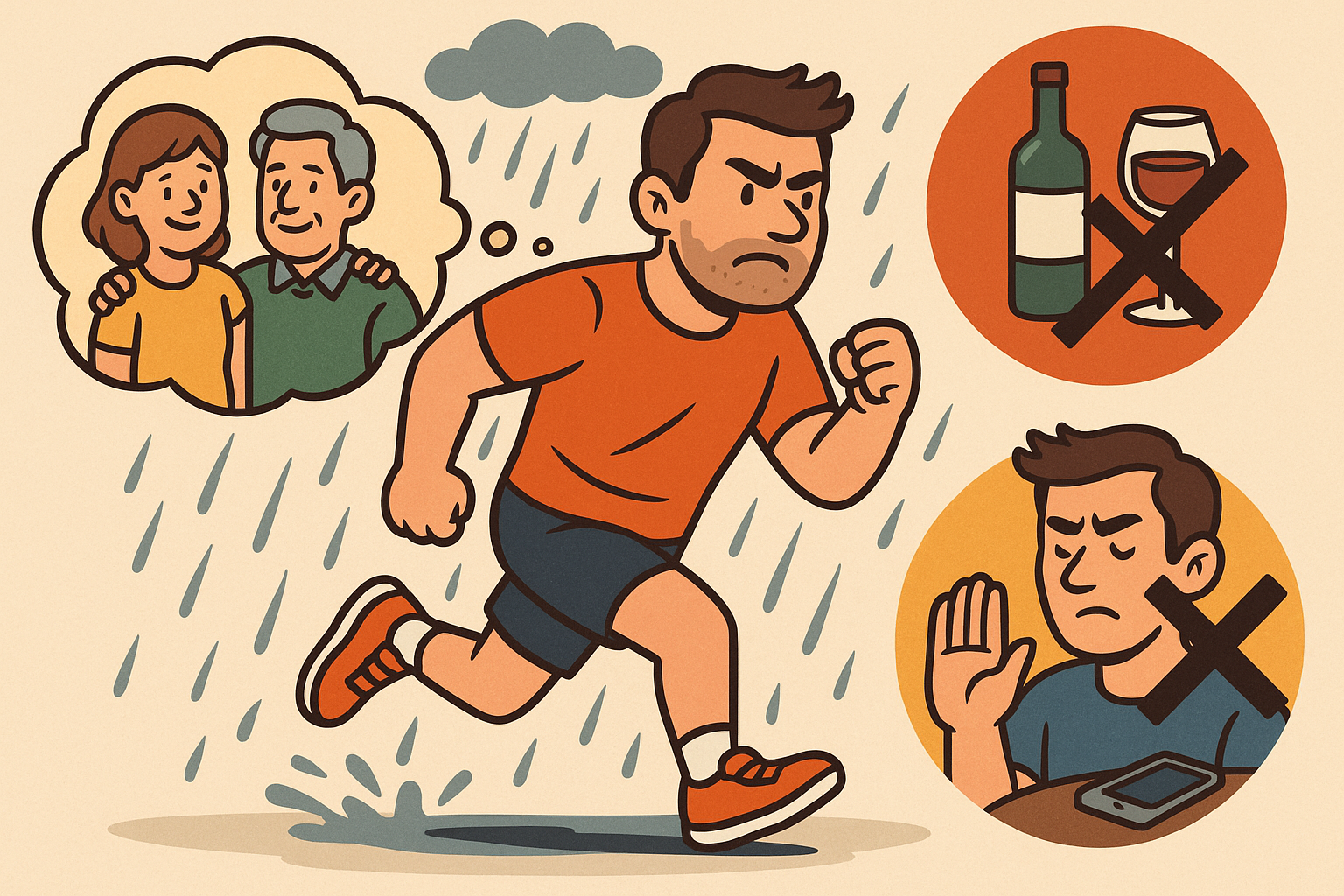
Discomfort, Non‑Choices, and Your Bigger Why
Modern life is built to remove almost every kind of friction; food, rides, entertainment, and distractions are always one tap away. The side effect is that the very discomfort that builds resilience, self-respect, and long-term success gets engineered out of daily life unless you bring it back on purpose.
Part 2 is about choosing the right kinds of discomfort, turning serious goals into non‑choices, and connecting all of it to a why that actually pulls you forward. Read part 1 here
Why Intentional Discomfort Matters
Voluntary discomfort means choosing small, controlled hardships: hard workouts, cold mornings, fasting, saying no to indulgences, when you could easily stay comfortable. Studies and expert commentary suggest that this kind of chosen adversity raises your tolerance for stress, builds mental toughness, and trains your nervous system to stay calmer under pressure.
Over time, practicing discomfort creates a “buffer” that makes everyday challenges feel more manageable: difficult conversations, business setbacks, or parenting stress no longer overwhelm you the same way. You also develop more gratitude for the comforts you do have, because you regularly experience life without them.
The Power of Non‑Choices
Every serious goal comes with built‑in non‑choices: things that are simply off the table if you are truly committed. If you want to run a race, prepare for a bodybuilding show, or hit a specific revenue target, then skipping training, sleeping too little, or constantly breaking your prospecting blocks is not just “less ideal”, it is incompatible with your desired outcome.
Thinking in non‑choices shifts you from “Should I do this today?” to “People like me just do this by default.” That identity-based framing makes discipline feel less like a daily argument with yourself and more like following your own internal rulebook.
You can start by defining non‑choices around:
Enjoyment vs Addiction
There is a crucial difference between enjoying something, like wine, beer, dessert, or social media, and using it in a way that edges into addiction. Healthy enjoyment is intentional and limited; you actually taste, notice, and appreciate the experience. Compulsive use is different: you drift past enjoyment into numbing, preoccupation, escalating use, and consequences that start to touch your health, relationships, or work.
A useful diagnostic question is: “Do I genuinely like this, or am I using it to avoid feeling something?” Another is: “Could I comfortably go without this for 7–14 days?”
If the idea of a short break causes anxiety or strong resistance, it might be a signal to look more closely.
Saying “No” to Protect Your “Yes”
When you commit to real goals, you will have to say no to things that used to be automatic yeses: late nights, extra drinks, mindless scrolling, or another episode instead of sleep. At first, your environment may push back, friends might tease you, colleagues may test your resolve, or family members might not understand why you are suddenly more serious.
The shift that makes this sustainable is focusing less on what you are giving up and more on what you are protecting. When you say no to another drink, you are saying yes to a clear head and a strong run in the morning; when you leave the party early, you are saying yes to being the person who keeps promises to themselves. Over time, people either adjust and respect your boundaries or drift to the edges of your life, and both outcomes are useful information.
Let Your Why Do the Heavy Lifting
Discomfort is much easier to carry when it is tied to someone or something bigger than your own preferences. Identity-based habit research shows that behavior change sticks better when it grows out of “who I am” and “who I am becoming,” not just “what I want to achieve.” Running early, lifting consistently, or prospecting daily feels different when your why is:
A powerful exercise is to write one sentence that connects your goal, your identity, and your why:
Make It Real: A 7‑Day Discomfort and Non‑Choice Experiment
To move from theory to practice, try this simple 7‑day experiment.
Choose your identity sentence, one microdose of discomfort, and 2–3 non‑choices for the next 7 days, then share them with someone you trust so they stop being ideas and start becoming who you are.
In all that we do, let us seek wisdom, discipline, courage & justice.
Be well,
Keita




.png)
.png)
.png)
.png)